Skip to content

Specification Review

plastic cup thermoforming machine

Resolve the cup configuration, tool ownership and acceptance method before selecting a manufacturer. This dossier compares documents: part drawing versus forming-area leaflet, closing-force rating versus projected tool area, and trial notes versus wall-thickness plus rim checks. It is not an engineering stamp and it is not a compliance certificate for food cups.

Decision topic: Document comparison
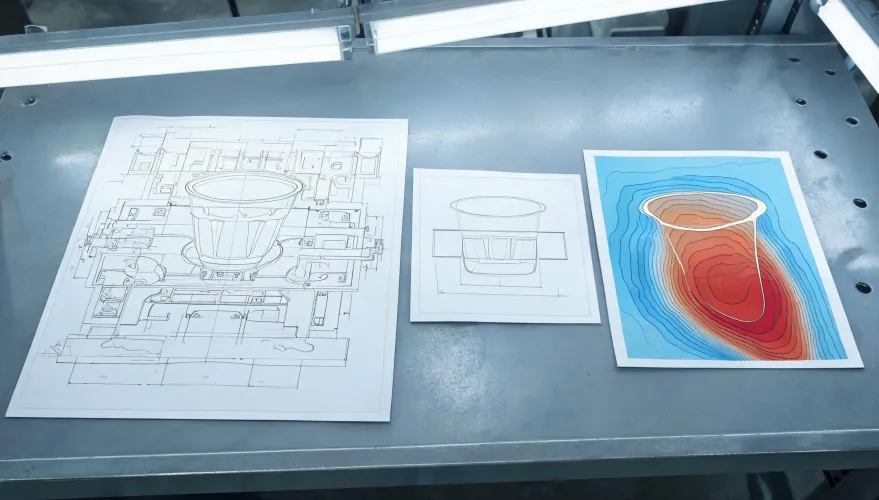
Plastic cup thermoforming tool drawing placed beside a forming-area leaflet and a wall-thickness map

Decision dossier

Document comparison

Document comparison: Design input

Buyer documents: cup drawing with rim, stacking lugs and print register; polymer or multilayer structure; sheet gauge; intended cavities; connected load and footprint limits; quantity and destination. Optional budget with currency and per-unit or whole-order basis may sit in the same pack. Food-contact declarations belong with the converter, not as a substitute for machine data.

Supplier answer

Manufacturer documents should name forming area in mm, forming height, closing force in kN, heater layout, cycle-rate basis, and who supplies forming, trimming and stacking tools. Ask how wall-thickness distribution and rim geometry will be measured on a trial using the buyer sheet. Public references such as the ILLIG RDM 76K 4G forming-area page illustrate how leaflets present area, height and force; they are not a promise that this sourcing desk has audited that model for your cup.

Open deviation

Typical gaps: cavity count that does not fit the published forming area, closing force that is silent on projected tool area, trim quoted by a second vendor with no interface drawing, or a cycle rate without first-good scrap. Those lines stay open until written. See tool and sheet interface before treating the machine price as the project price.

Split machine, tools and site work on the cup RFQ

Discuss Your Requirements